
In 2026, the eldest biological daughter of Angelina Jolie and Brad Pitt has taken significant legal steps to forge a path entirely her own, signaling a definitive shift in her public and private identity. Now 19 years old, she has officially transitioned from her birth name to the shortened moniker “Shi” and has successfully filed to legally remove “Pitt” from her surname. This decision is not merely a stage name for her burgeoning choreography career—where she was recently credited as “Shi Joli” during a high-profile fashion event—but a permanent legal change that mirrors a broader movement of independence among her five siblings.

The family dynamic has remained under intense scrutiny following years of public legal battles, with reports suggesting a deep-seated estrangement between the children and their father. Her brother Pax has been particularly vocal on social media, reportedly describing a tense and fearful atmosphere that characterized their younger years. While Brad Pitt has expressed profound sadness over these developments, the “Jolie” children appear to be acting as a united front, with siblings Zahara and Vivienne also opting to drop their father’s surname in professional and academic settings, prioritizing their mother’s name as they enter adulthood.

Recent sightings of Shi on the streets of New York and Los Angeles have sparked intense conversation regarding her “radical image overhaul.” Stepping away from the polished Hollywood mold, she has debuted an edgy, punk-inspired look featuring platinum blonde hair and a labret piercing. While some onlookers have expressed confusion over this bold transformation, those close to her suggest it is a natural evolution for a young artist who prefers working “behind the scenes.” This aesthetic shift is widely viewed as a visual declaration of her autonomy, moving away from being a “miniature version” of her famous parents toward an authentic, self-defined persona.

For Angelina Jolie, witnessing such a public and profound transformation is undoubtedly a complex experience, though she has consistently championed her children’s right to privacy and self-expression. She has often noted that her daughters, especially Shi, are “extremely private” and have no interest in following the traditional acting path. Instead, Shi has found her voice through dance and choreography, utilizing her new name to build a reputation based on her own creative merit rather than her famous lineage. This professional pivot allows her to control her narrative in a way that was impossible during her childhood in the spotlight.
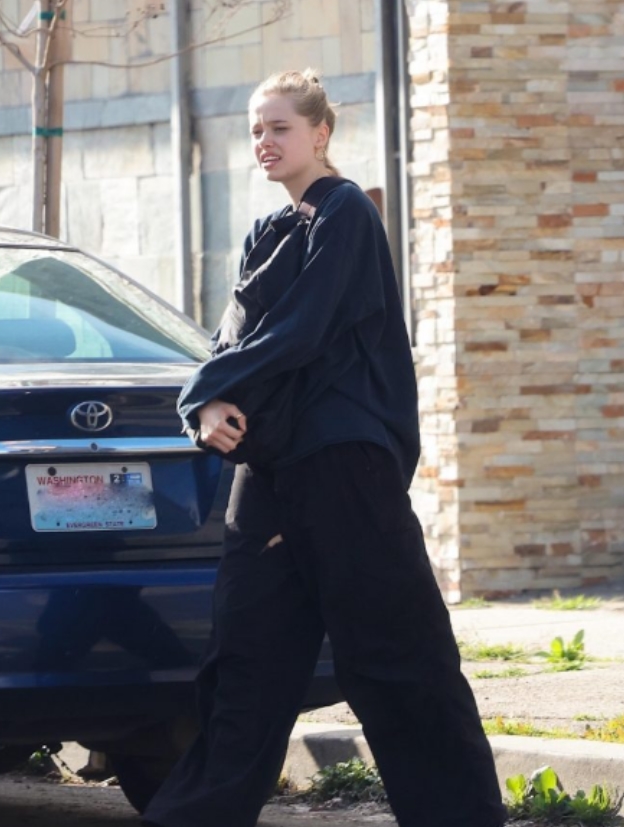
As Shi continues to navigate her journey in 2026, her actions represent more than just a period of youthful protest; they are the calculated choices of a young woman reclaiming her history. By discarding a famous surname and adopting a new identity, she is challenging the world to see her as an individual rather than a tabloid fixture. Whether this distance from her father remains permanent or evolves over time, her current chapter is one of resilience and reinvention. Ultimately, she is proving that while you cannot choose the family you are born into, you can certainly choose the name—and the future—you carry forward.
Marathon Runner Diagnosed With Terminal Cancer Warns Against Ignoring Small Symptoms

A marathon runner diagnosed with terminal pancreatic cancer has urged people not to ignore even small symptoms after experiencing what he initially thought were minor health issues. The shocking diagnosis has changed his life, pushing him to raise awareness about this deadly disease.
A Shocking Diagnosis: Terminal Pancreatic Cancer
Lee Rawlinson, 51, a medical sales representative and passionate marathon runner, lives in Essex, UK, with his wife, Faye, and their two children, Darcey, 10, and Marley, seven. On Halloween, Lee received the devastating news of his pancreatic cancer diagnosis. Medics revealed the disease had already spread to his liver, leaving him with just months to live.
Despite the grim prognosis, Lee focused on making “magical memories” with his family during what he called his “last Christmas.” The dad-of-two has since shared his story to raise awareness of the disease, hoping to help others avoid a similar fate.
“This will be my last Christmas,” Lee said. “I’m facing the jaws of death. I’m sailing toward it, and I can’t do anything about it. But my fear isn’t death itself; it’s leaving my children and my wife behind.”

The Early Symptoms of Pancreatic Cancer
Lee’s journey began in January when he noticed a dull ache in his lower abdomen. At the time, he dismissed it as stress-related discomfort. Even after visiting his GP and being referred to a gastroenterologist, he faced a 21-week wait for further testing. His initial blood and urine tests came back clear, which led to no immediate follow-up.

By September, the pain became unbearable. “I was taking painkillers daily, but they weren’t helping. It felt like someone was slowly pushing a scaffolding pole right through me,” Lee explained. One week later, during his son’s football practice, the severe pain sent him to the emergency room at Southend University Hospital. A CT scan shortly after revealed the devastating truth: terminal pancreatic cancer.
Raising Awareness for Pancreatic Cancer
Reflecting on his experience, Lee shared how critical it is to listen to your body and act on unusual symptoms. “I didn’t think much of it when the dull ache started,” he admitted. “But I wish I’d paid closer attention and pushed for further tests earlier. Early diagnosis could make all the difference.”

Lee learned that his grandfather had pancreatic cancer, which indicated a genetic predisposition. “The consultant told me that it’s sometimes just your destiny,” Lee said. He hopes his story will encourage others to take even minor symptoms seriously.
“If you experience persistent pain or unusual symptoms, don’t brush them off,” Lee urged. “Get checked out, even if it seems insignificant. It might save your life.”
Making Memories Amidst a Terminal Diagnosis
Despite the grim outlook, Lee has focused on cherishing time with his family. He surprised his children with a trip to Lapland and is determined to create lasting memories for them. “I want to be there for my kids, even if it’s only in their memories,” he said.
He also emphasized the need for more research and support for pancreatic cancer. “Survival rates for pancreatic cancer have barely improved since the 1970s. This must change,” Lee said. “We need people to take notice so this disease doesn’t destroy more young families.”
Lee continues to live each day to the fullest, balancing the harsh reality of his diagnosis with the love and joy he shares with his family. He remains a strong advocate for awareness and early detection, encouraging others to act quickly when their bodies send warning signals.
If you’ve been affected by any of these issues and want to speak to someone in confidence, contact the American Cancer Society at 1-800-227-2345 or via their 24/7 live chat feature.