There are moments in life that divide the world into two halves: before and after. For Jocelyn’s family, that moment arrived when she was just seventeen months old.
She was a toddler full of light and wonder—learning new words, discovering the world with tiny hands, and finding joy in the simplest of things. Her future felt infinite. Birthdays, preschool adventures, first steps, laughter-filled days—all seemed possible.
Then, in a heartbeat, everything changed.
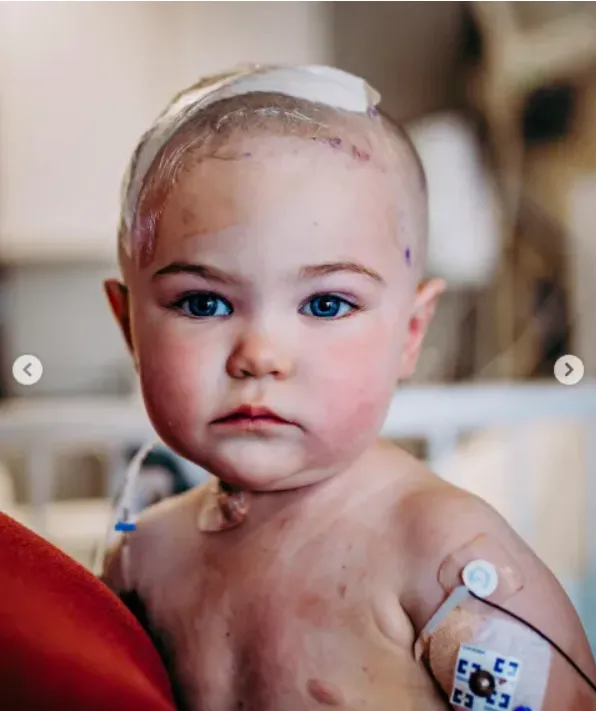
The Day the World Stood Still
It began with scans and urgent appointments that no parent ever expects. The words, when they came, hit like a thunderclap:
Atypical Teratoid/Rhabdoid Tumor (ATRT).
A rare, aggressive brain cancer.
In their baby.
The doctors explained carefully, clinically, gently—but the meaning was devastating. The words hung in the air like a storm cloud: rare. Fast-growing. Devastating.
Seventeen months old is supposed to mean bedtime stories, stuffed animals, and gentle lullabies—not surgical consent forms, MRIs, and chemotherapy plans. Overnight, the family entered a new, terrifying world. They had to learn a language of medical terms: sedation, blood counts, treatment protocols, proton radiation, immunotherapy. The vocabulary of fear and hope intertwined.

At the center of it all was a child too young to understand why her tiny world had suddenly become a place of pain, wires, and hospital rooms.
Surgeries, Treatments, and Relentless Courage
Jocelyn’s first brain surgery came swiftly. Watching her being wheeled into the operating room was a fear so deep it cannot be described—only endured. Hours later, when she returned, wrapped in bandages and tubes, her parents clung to hope, telling themselves this was the beginning of healing.
Over the next two years, Jocelyn endured eighteen different chemotherapy drugs.
Eighteen.
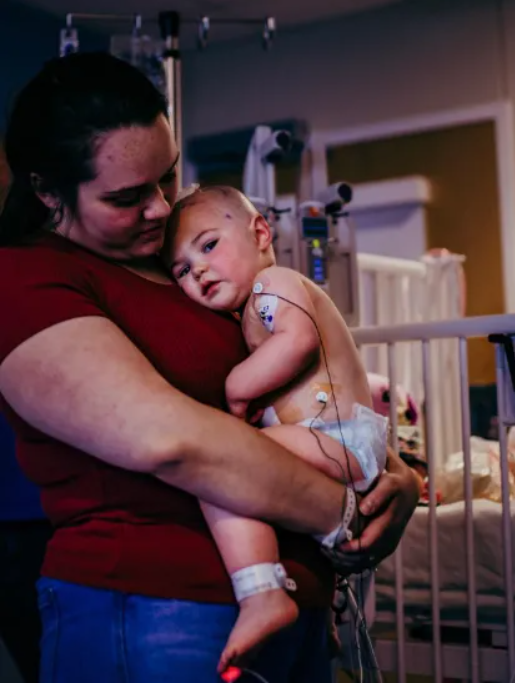
Each one carried side effects far beyond what a toddler’s body should endure. Hair fell out. Appetite vanished. Energy drained away. Yet, despite all this, her inner light never dimmed. Even on the hardest days, she smiled. She reached for her parents. She laughed when she could, reminding everyone that she was still a child and that joy, no matter how small, still mattered.
When standard treatments failed to halt the cancer’s progression, Jocelyn’s family turned to immunotherapy, trying two different drugs to provide another chance. Waiting became its own form of suffering: waiting for results, waiting for signs of improvement, waiting as the disease continued to take its toll.
Five Brain Surgeries and a Childhood in Hospital Rooms
In total, Jocelyn underwent five brain surgeries.
Five times her skull was opened.
Five times her parents signed consent forms knowing the risks.
Five times childhood as it should have been was interrupted.
Hospitals became home. Birthdays were celebrated beside IV poles. Holidays passed under fluorescent lights. Nurses learned how to make her laugh. Songs became comfort. Small victories—a stable scan, a strong heartbeat, a laugh amidst pain—became everything.
The outside world carried on as usual, but Jocelyn’s family existed entirely within the fight for her life. Every day was measured in moments of survival and tiny glimpses of joy.
When Hope Changes Shape
People often call children with cancer “brave.”
Jocelyn was more than brave.
She endured unimaginable pain without understanding why. She trusted completely. She demonstrated strength that was quiet, steady, and profoundly moving.
Yet even the strongest light can flicker. There came a moment when hope had to change shape—shifting from cure to comfort, from fighting to holding and loving as deeply as possible for as long as possible.
When doctors confirmed that treatments had failed, the unthinkable became real.
Jocelyn passed away at three years old.
Three.
An age meant for running, dreaming, laughing, and growing—not for saying goodbye.
The Silence That Never Leaves
After she was gone, the house felt unbearably quiet. Her toys remained untouched. Her clothes still carried her scent. The world continued, but her family did not. Grief became a constant companion. No parent should ever have to bury a child. Words cannot capture that emptiness, only the aching presence of absence.
Yet within that silence, Jocelyn’s love remained. It lived in every memory, every song, every photograph, and every small object that once brought her joy.
Why Jocelyn’s Story Matters
Through their journey, Jocelyn’s family encountered others facing the same nightmare. Families bound by shared pain, shared hope, and shared loss. The childhood cancer community is one no parent ever wishes to join, yet once inside, it becomes a world where bonds are formed in the crucible of unimaginable challenge.
Childhood cancer research remains critically underfunded, and rare cancers like ATRT receive even less attention. Families are forced not only to fight the disease but also to fight for resources, for awareness, and for hope.
Awareness is not symbolic. It is lifesaving. Sharing stories like Jocelyn’s can accelerate research, funding, and understanding.
A Legacy of Love and Action
Jocelyn’s story is for:
- Children still fighting in hospital beds.
- Parents whispering prayers in the dark.
- Families learning to live with loss.
- And for children who didn’t survive—whose names deserve to be spoken, remembered, and honored.
Jocelyn mattered. Her life mattered. Her fight mattered. Her love changed everyone who knew her.
Though her life was brief, its impact is lasting. She taught her family—and the world—how precious every heartbeat is.
Honoring Jocelyn by Making a Difference
Her story calls us to action:
- Support childhood cancer research.
- Advocate for better treatments.
- Raise awareness.
- Stand with families in crisis.
Childhood cancer is never rare to those living it. And it will not end unless more people care.
Jocelyn’s courage lives on—in every memory, every shared story, and every effort to create change. Some lights do not go out when life ends. They continue to shine in love, in action, and in remembrance.
Her small heart left an enormous mark. She showed that even the youngest, smallest lives can teach the world about resilience, love, and the extraordinary strength of the human spirit.
Jocelyn’s story is more than a tale of loss. It is a testament to the power of hope, to the unbreakable bonds of family, and to the necessity of fighting for every child, every day. Her life, though brief, reminds us all that love, courage, and memory are timeless—and that even the smallest hearts can leave the biggest legacy.
Charlotte’s Journey: A Tiny Hero’s Fight Against CDH.884
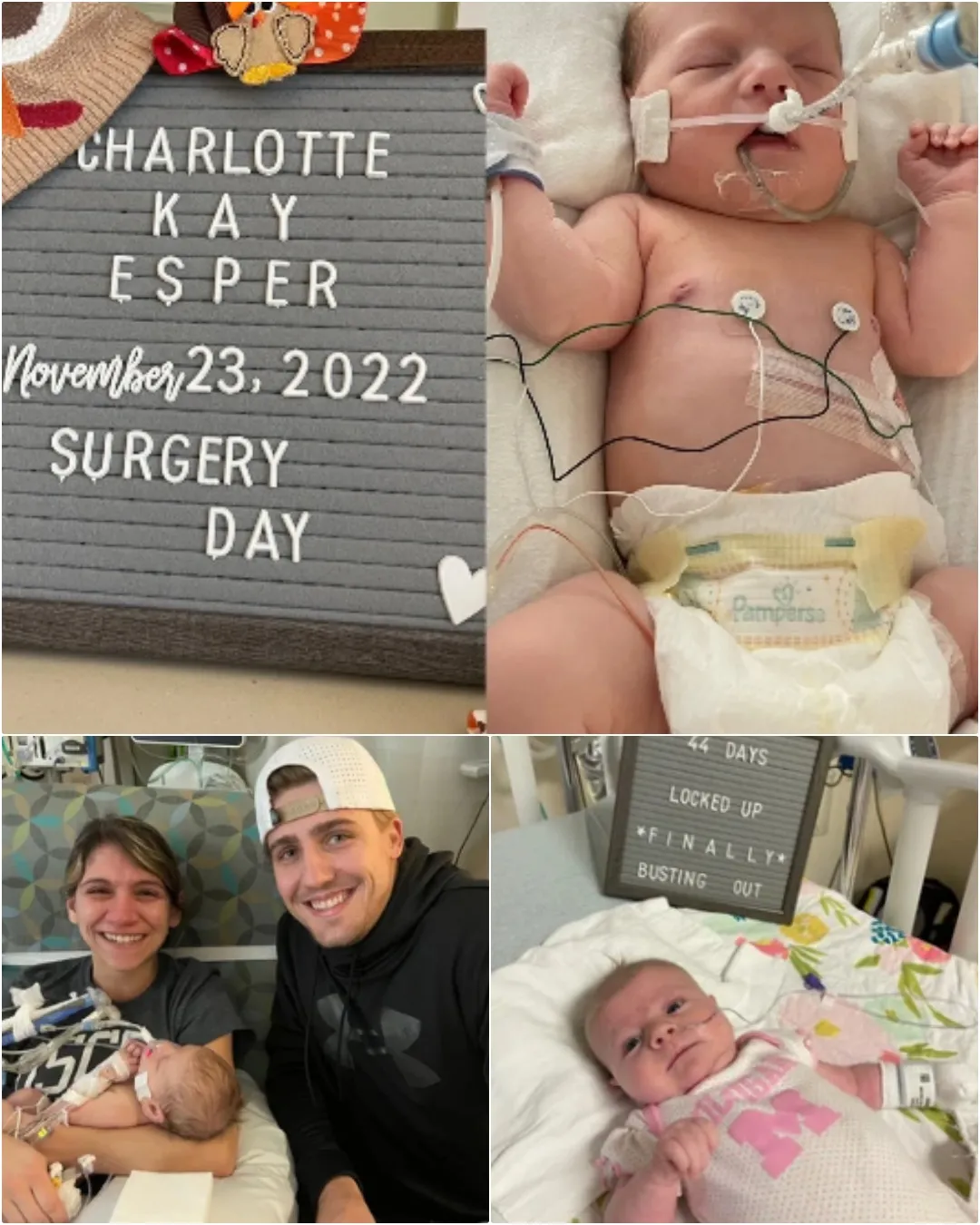
At my 18-week ultrasound, I never could have imagined the words that would change our world forever. The technician paused for what felt like an eternity, and I could see the concern in her eyes. She told us that our sweet baby girl had been diagnosed with a left-sided congenital diaphragmatic hernia (CDH). In that moment, a rush of disbelief swept over me. I thought to myself, “This can’t be right. It’s just a mistake. It’s not something that WE would have to deal with, not OUR baby. It must be a misread.” But as the days went by, it became clear that this wasn’t a mistake—it was real. And it was happening to us.
I quickly transferred my care to the University of Michigan, where I had an MRI to get a clearer picture of Charlotte’s condition. The results were sobering. Her stomach, small intestines, spleen, and left lobe of her liver were all in her chest, leaving only a small space for her lungs to develop. Her total lung volume was just 13.1, with an observed-to-expected ratio of 29%, which indicated that her lungs were severely underdeveloped. Despite all of this, I still felt incredibly good physically during my pregnancy, and we pushed forward, clinging to hope and determined to give Charlotte the best chance possible.
At 40 weeks and 3 days, I decided it was time to be induced. I had been feeling large and ready, so I made the decision to take control and bring my sweet girl into the world. Charlotte was born on November 15, 2022, at 6:51 a.m., and as soon as she arrived, she was intubated and rushed to Mott’s Children’s Hospital NICU for immediate care. Her doctors were concerned about her pulmonary hypertension, and within the first 24-48 hours, they discussed putting her on ECMO, a life-support machine. But Charlotte, true to her nature, proved to be stronger than expected. She began to improve on her own, and they ultimately decided that ECMO wasn’t necessary. It was a relief, but it was only the beginning of a long journey ahead.
For the first week of her life, Charlotte’s care team focused on getting her off the jet ventilator she was on and onto a conventional ventilator. Each day was filled with small victories, but the fear of the unknown never left my heart. I longed to hold her, to comfort her, but we were separated by the wires, machines, and tubes that were keeping her alive. Finally, on November 22, a week after she was born, I was able to hold her for the first time. It was just a brief moment, and I could barely feel her weight in my arms as I watched my husband cut her umbilical cord after delivery. But that moment was everything—it was a glimpse of the bond we had been waiting for, even if it was brief.
On November 23, Charlotte underwent surgery to repair the defect in her diaphragm. The hole was large enough that the surgeons had to use a Gortex patch to close it. During our time in the hospital, pediatric cardiology performed two echocardiograms, and the results were encouraging. Her pulmonary hypertension had nearly resolved, and she wouldn’t need any medications to manage it. This was a huge relief. We were so grateful for the progress, but we knew the journey wasn’t over yet.
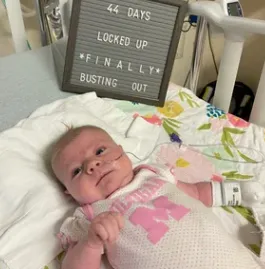
Charlotte was extubated on November 27, just a few days after her surgery. She was placed on CPAP, and we began to see more improvements in her respiratory function. On December 13, we transitioned her to high-flow oxygen, and by December 18, she was off of versed and morphine. That same day, she began full NG belly feedings. We had made it past so many hurdles, but there were still a few more milestones to reach before we could bring our baby girl home.
By December 21, Charlotte was on room air, which was another huge accomplishment. The constant flow of oxygen had been replaced with fresh air, and she was breathing on her own, just like any other newborn. We couldn’t have been more proud of her strength and resilience. And just eight days later, on December 29, we were finally able to bring Charlotte home. She was sent home with an NG tube and no medications except for Pepcid and vitamin D. It was bittersweet to leave the hospital—we were filled with gratitude for the care she received, but the reality of being home without the constant support of the medical team set in.
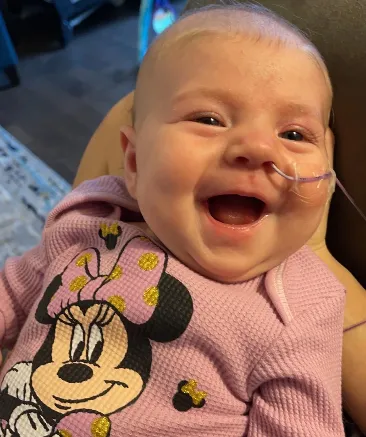
In the first week at home, Charlotte’s pediatrician gave us the green light to remove the NG tube when we felt she was ready. Charlotte had already started taking a bottle and breastfeeding without any issues, but we chose to leave the NG tube in for a little longer. She had been doing well with her feeds, and we just wanted to make sure she was consistently taking full bottles by mouth before removing it. Charlotte has been making progress, and we’re hoping to have the NG tube out in the next two to three weeks.
Our sweet Charlotte is already proving herself to be a tiny hero. Her journey has been filled with so many challenges, but her spirit has never wavered. She’s a little fighter who has beaten every obstacle that’s been thrown her way. And while her battle isn’t over yet, we know she’s stronger than we ever imagined.
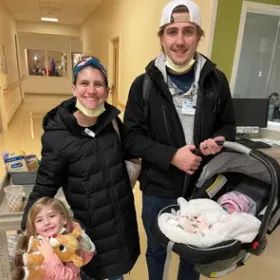
Charlotte’s story is one of hope, perseverance, and the incredible resilience of a tiny little girl who was determined to fight for her life. Every day with her is a gift, and I am beyond thankful for the care she received at Mott’s and for the team of doctors and nurses who fought alongside her. Her story is a testament to the power of love, determination, and the unwavering belief that our little ones are capable of incredible things.
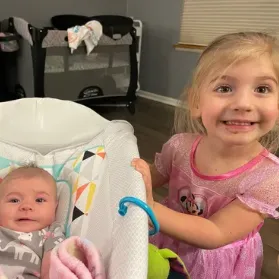
As we continue to watch Charlotte grow, I am filled with pride and gratitude. She’s now thriving at home, a beautiful, strong, and loving little girl who keeps us on our toes every single day. Her love for life is evident in the way she lights up every room she enters, and we can’t wait to see what the future holds for her. Charlotte is, without a doubt, our Tiny Hero, and we’re so blessed to be her parents.